The Twelve-Millisecond Difference: Why Two Identical Games Can Feel Worlds Apart

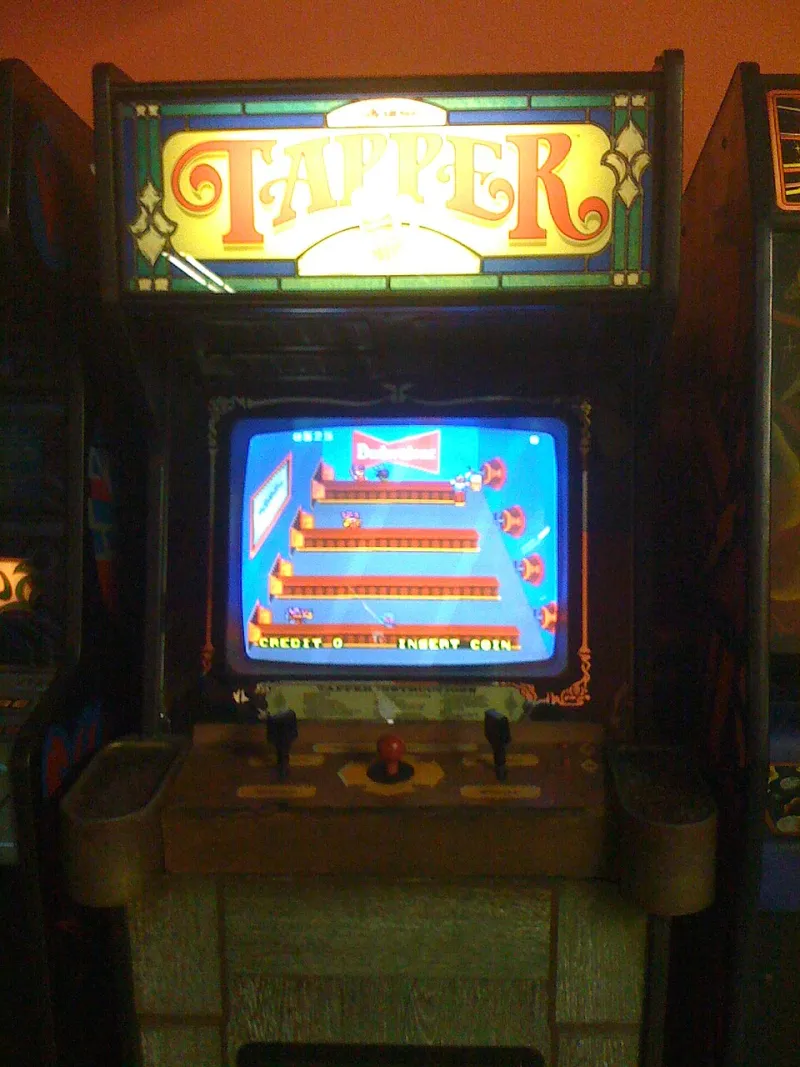
Photo: Shixart1985, CC BY 2.0, via Wikimedia Commons
Two games. Identical rules. Identical sprites, identical levels, identical point values. You play the first for ninety seconds and something clicks — your brain stops thinking about the game and starts thinking about the score. You play the second and it feels like filing paperwork with a controller.
Nothing in the rulebook explains it. The difference lives in the space between your thumb and the screen, in a stack of tiny decisions made by people you'll never meet, mostly measured in milliseconds. Game designers call the result “game feel” or, more honestly, “juice.” Players call it “this one's good.”
Both descriptions are correct. Only one of them is useful.
The Number That Explains Everything
At sixty frames per second, each frame lasts about 16.7 milliseconds. That's the heartbeat of nearly every browser and mobile arcade game you've ever played. Twelve milliseconds is less than one frame. It's roughly the time it takes a car going 60 mph to travel a foot.
And yet that window of time is where the entire personality of a game hides. Not because players consciously count milliseconds, but because the nervous system is a ruthlessly precise instrument that has been calibrated by physical reality since birth. When a real ball hits a real wall, the world gives you feedback immediately — sound, vibration, recoil, the whole bundle, all at once. Games that reproduce that bundle feel solid. Games that don't feel hollow, and most players can't tell you why.
Hit-Stop: The Freeze Frame Nobody Sees
Here's the most counterintuitive trick in the arcade playbook. When your attack connects in a well-built action game, the entire game — the player, the enemy, the animations, everything — freezes for a few frames. Typically two to six. Maybe 40 to 100 milliseconds.
Nothing happens. Nothing at all. And it feels incredible.
The technique is called hit-stop, and it dates back decades. Freezing the frame gives your eye time to register contact. It implies mass, resistance, consequence. A punch that doesn't pause feels like swinging at smoke. A punch that pauses for four frames feels like hitting a bag of sand. Same animation. Completely different impression.
The same logic lives in arcade puzzlers and physics games: a brief stall on a block landing, a half-beat hold before the screen flashes. It's punctuation. The game is speaking to you in the grammar of comic books.
Screen Shake and the Physics of Consequence
Screen shake is the loudest tool in the box, and the most frequently misused. Done well, it's a tiny camera jolt — three or four pixels, decaying over a fifth of a second — that tells you something significant happened, and roughly how significant. Done badly, it's a headache with a frame rate.
The good version works because of how human attention handles motion. Anything that moves in your peripheral vision triggers a reflex: what was that? A well-tuned shake doesn't just look cool, it re-centers your focus on the point of impact without you deciding to look. It's a camera operator, not a special effect.
Particles: Confetti With a Day Job
The burst of debris when a target breaks, the little sparks that trail a projectile, the confetti that rains when you clear a level — these aren't decoration. Each one is a receipt. It says: that registered, here's your proof, here's how much.
Particle effects do something else too, and it's nearly invisible. They hide the seams. Where animation frames snap, where a sprite is removed, where a hitbox ends — particles fill those gaps with motion so your eye reads a continuous event instead of a mechanical transition. Remove them and the same action looks abruptly cheap.
Sound Is Half the Frame
Ask a sound designer and they'll tell you the truth the art team won't: audio is doing more lifting than the visuals. A hit with a clean sound but plain visuals will read as satisfying. A hit with gorgeous visuals and a dull, dry sound will read as soft, every time.
Good arcade audio is layered. There's a transient — a click or a snap, the sharp front edge that says “contact, now.” There's a body — a low thump that implies weight. And there's a tail — a tiny reverb or decay that tells you the space the object exists in. Three layers, stacked in about 200 milliseconds. Strip any one out and the hit loses its credibility, even if the player couldn't pick which one went missing if you paid them.
The Invisible Systems Nobody Talks About
Below the polish sits an even quieter layer: forgiveness mechanics.
Input buffering. You pressed jump 80 milliseconds before you landed. The game remembers and executes on the ground. Without it, you'd press again and feel clumsy.
Coyote time. Named after the cartoon character who runs off a cliff and only falls when he looks down. Leave a ledge and the game gives you a few frames of grace to still jump. It's technically a bug that became a standard. Nobody wants the version without it.
Camera lag. The view trails slightly behind the player instead of locking perfectly. It makes movement feel faster and softer at once.
Easing. Nothing in a good game moves at constant speed. Everything accelerates in, settles out, and overshoots by two pixels before coming to rest. The organic wobble is the reason a menu feels expensive instead of finished.
Why It All Adds Up
Each of these choices is worth less than a blink. None of them will show up in a screenshot. But stack twenty of them and a game stops being a set of rules and starts being a physical object your hands believe in — which is precisely what the best arcade cabinets did in 1982, what the best browser games do today, and what separates a hit from a list of mechanics.
The industry didn't evolve toward this. It accumulated it, one frame at a time, from designers who noticed that a four-frame pause made a punch land. That's the whole history of the medium in miniature: nobody invents feel. You just keep noticing, and then you keep it.
Next time a game grabs you in the first ten seconds, go back and watch it closely. Something froze. Something shook. Something clicked. It took twelve milliseconds, and it took forty years to learn.