Quarters and Feelings: What You're Really Buying When You Play a Retro Arcade Game
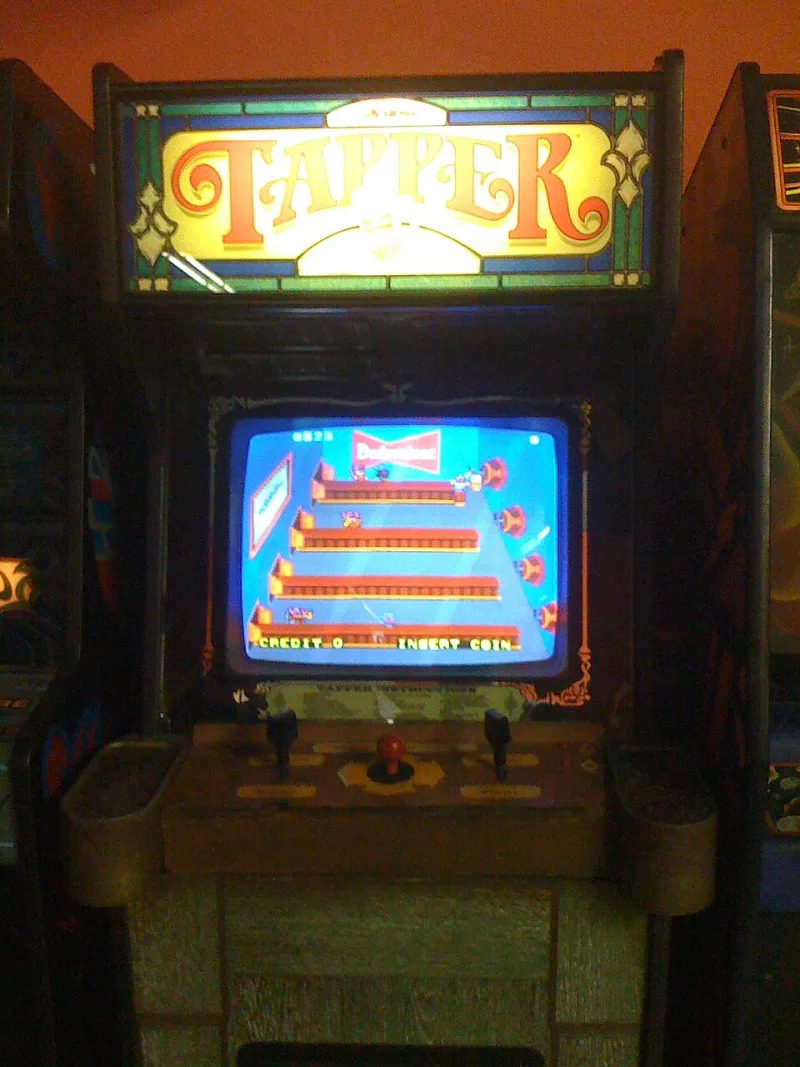
Photo: Rob DiCaterino from Jersey City, NJ, USA, CC BY 2.0, via Wikimedia Commons
Let's be honest about something for a second. When you fire up a pixel-art arcade game on your phone and feel that warm rush of recognition — the chunky sprites, the chiptune soundtrack, the simple lives-and-score format — what exactly is generating that feeling? Is it the gameplay? Or is it the memory of who you were the last time you played something that looked like this?
It's a question worth asking, because the retro arcade revival isn't slowing down. It's accelerating. And the money flowing into nostalgia-flavored gaming has gotten significant enough that it deserves a clear-eyed look at what's actually driving it.
The Golden Age That Keeps Getting Shinier
American arcade culture peaked somewhere in the early-to-mid 1980s. If you were a kid during that window, the local arcade was a genuinely electric place — loud, dark, expensive by allowance standards, and full of games that were designed to be brutally hard because the business model ran on quarters. Every death was a deposit.
That era ended. Arcades closed. The games migrated to home consoles. The culture moved on. But the memory of that era didn't fade — it calcified into something almost mythological. The golden age of arcades has been retrospectively polished to a gleam that the reality probably didn't always match.
Nostalgia does that. It's not a neutral recording of the past — it's a selective highlight reel, edited by time and emotion, that tends to cut the boring parts and the frustrating parts and the parts where you wasted your last quarter on a game you'd never played before and died in 11 seconds.
The Marketing Machine Behind the Pixel Art
Game publishers and indie developers are not unaware of this dynamic. The visual language of retro gaming — 8-bit and 16-bit aesthetics, limited color palettes, chunky fonts, that particular lo-fi sound design — functions as a trigger for a specific emotional state in players of a certain age. Deploy it correctly and you're not just selling a game. You're selling access to a feeling.
The economics work remarkably well. Retro-style games are cheaper to produce than photorealistic titles. The aesthetic is achievable with a small team and a reasonable budget. And the marketing writes itself — "remember when games were like this?" is one of the most effective pitches in the industry, because it doesn't require the player to evaluate the game on its merits. It just asks them to remember how good things used to feel.
That's not necessarily cynical. Good marketing meets people where they are. But it does mean that some retro-branded games are trading almost entirely on nostalgia, offering gameplay that wouldn't survive scrutiny if it weren't wrapped in the right aesthetic packaging.
The Defenders of Throwback Design
To be fair to the retro revival, not everyone playing these games is chasing a memory. There's a genuine critical case for classic arcade design that doesn't depend on nostalgia at all.
Classic arcade games were built around constraints that produced tight, elegant mechanics. Limited processing power meant developers couldn't rely on spectacle — the game had to be good because it couldn't be impressive. The best titles from that era have mechanical clarity that a lot of modern games, bloated with systems and content, genuinely lack.
"Old-school arcade design is ruthlessly honest," argues one indie developer whose studio builds deliberately retro-styled games. "There's no story covering for weak gameplay. There's no loot system making you feel progression you haven't earned. It's just: here are the rules, here's the challenge, here's your score. Players who love that aren't being nostalgic. They're being discerning."
That argument holds up, at least partially. The resurgence of simple, skill-based arcade games in an era dominated by live-service titles with complex progression systems isn't just sentimentality — it's also a market correction. Some players genuinely want games that respect their time and deliver a clean, honest challenge.
The Pushback From the Frontier
Not everyone is convinced the retro wave is healthy for the medium, though. Designers working at the edge of what arcade-style games can be tend to view the nostalgia economy with some skepticism.
The concern isn't that retro games exist — it's that the commercial success of nostalgia-driven titles creates a gravitational pull toward the past that can slow innovation. If a pixel-art throwback reliably outperforms a genuinely novel design on the charts, the market signal points backward. Why take risks when the safe play is to build something that looks like 1985?
"There's a version of loving arcade games that's actually about preserving what they were," one designer noted, "and there's a version that's about discovering what they could be. Those aren't the same thing, and I think we sometimes confuse them."
The players who fall into the first camp — and there are many — aren't wrong for wanting what they want. But the industry needs the second camp too. Arcade gaming as a form has a lot of creative territory still unexplored, and it only gets explored if developers are willing to step out from behind the comfortable shield of retro aesthetics.
What Are You Actually Paying For?
So here's the honest question: when you drop a few dollars on a retro arcade game, what are you buying?
Sometimes you're buying genuinely great design that happens to wear classic clothes. Some of the best arcade-style games being made right now draw on classic mechanics not because it's a marketing strategy but because those mechanics are legitimately excellent, and the developers understand them deeply enough to evolve them.
Sometimes you're buying a mood. A 20-minute vacation to a version of your childhood that's been edited for maximum warmth. There's nothing wrong with that — we buy moods all the time, from music to movies to the specific brand of coffee that reminds us of a good summer. The transaction is honest as long as you know what it is.
And sometimes you're buying the idea of a retro game — the aesthetic without the substance, the pixel art without the craft — and paying a nostalgia premium for something that wouldn't hold your attention for 10 minutes if it looked different.
The retro arcade revival is all three of these things at once, in varying proportions depending on the game. Learning to tell them apart is one of the more useful skills a player can develop. Your quarters — or your in-app purchases — deserve that much.