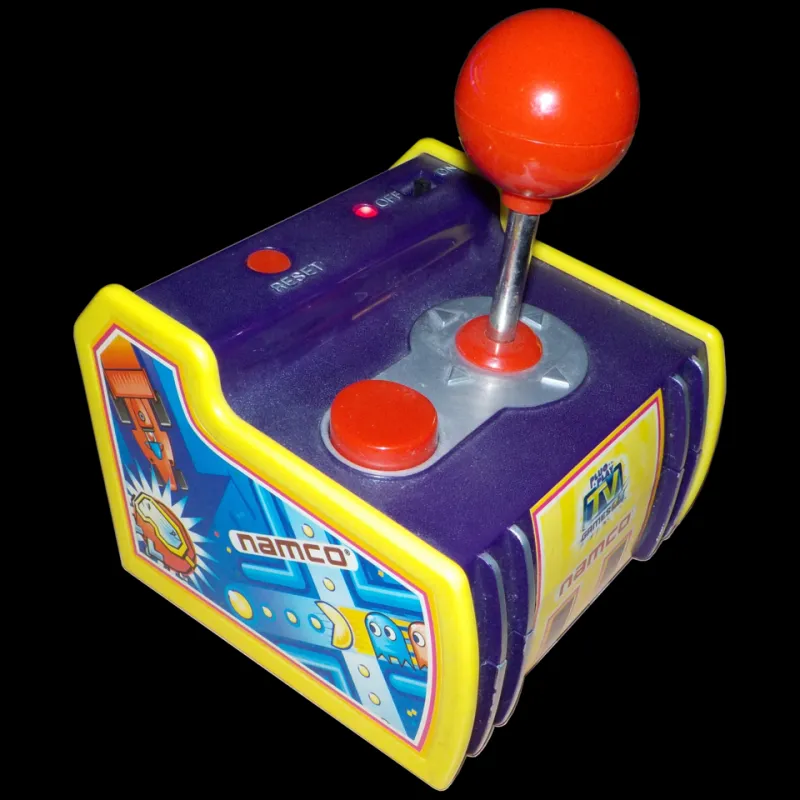
Level Up Your Workday: Why Smart Companies Are Replacing Coffee Breaks With Arcade Sessions
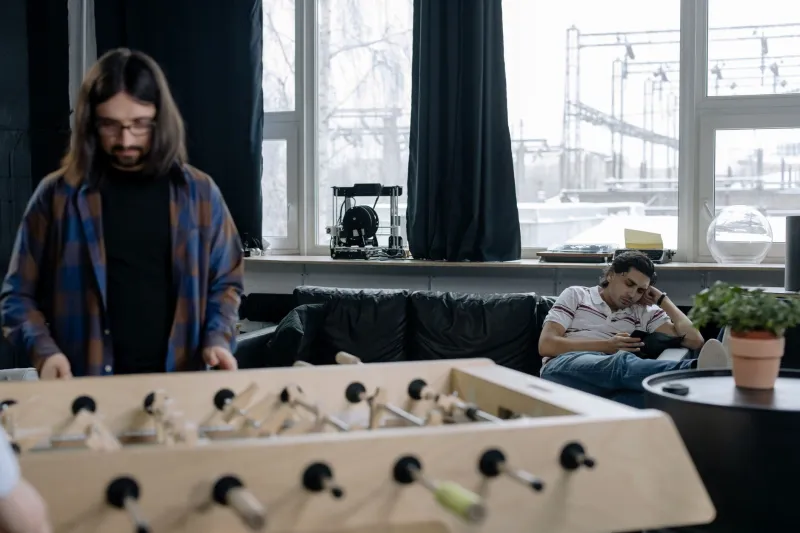
Let's be honest about the 3 PM slump. You know the one. The spreadsheet starts blurring, your fourth coffee isn't doing what your first one used to do, and every Slack notification feels like a personal attack. The standard advice — take a walk, do some deep breathing, try a mindfulness app — sounds great on paper. In practice, most people stare at their phone for 12 minutes and come back feeling roughly the same.
Some companies have started trying something different. They're putting arcade games in the break room. And the results, backed by a growing body of research and a handful of genuinely surprising case studies, are turning heads in the workplace wellness world.
Your Brain on a Quick Game
The neuroscience here isn't as complicated as it might sound. When you're grinding through cognitively demanding work — analysis, writing, decision-making — you're drawing on the prefrontal cortex, the part of your brain responsible for focus and executive function. That resource depletes. It's not a metaphor; it's a measurable cognitive state, and working through it past a certain point actually reduces the quality of your output.
What arcade games do particularly well is force a rapid context switch. The visual and motor demands of something like a fast-paced reaction game pull your attention into an entirely different cognitive lane. You're not passively resting — you're actively engaging a different set of mental resources. And when you return to your actual work, the prefrontal cortex has had a genuine break rather than just a change of scenery.
Dr. Rachel Simmons, a cognitive psychologist based in Chicago who has consulted for several tech firms on workplace wellness design, puts it plainly: "The specificity matters. Scrolling social media doesn't do this — it's still stimulating the same anxiety-adjacent neural pathways. A short, contained game with clear rules and immediate feedback is functionally different. It's a real reset."
Case Studies That Are Hard to Ignore
A mid-sized software development firm in Austin, Texas, installed a small gaming station — three tablets loaded with arcade-style games — in their common area in early 2022. They weren't expecting a revolution. They were expecting a perk that might help with recruiting.
What they actually got was a noticeable dip in afternoon error rates on code reviews. Their internal data, shared informally at an industry panel last year, showed a 14% reduction in bugs caught in post-review QA during the six months after installation compared to the six months before. The team lead attributed at least part of that to the shift in how developers were spending their 15-minute breaks.
A different story comes out of an insurance processing center in Hartford, Connecticut — not exactly the demographic you'd associate with arcade gaming culture. Management introduced a tablet-based arcade game rotation as part of a broader wellness initiative. Employee satisfaction scores went up. Voluntary overtime participation — a rough proxy for morale — increased. And perhaps most tellingly, usage of the company's existing meditation app actually dropped, suggesting employees were actively choosing the games over the alternative when both were available.
Why Arcade Games Specifically
This is the part that trips people up. Why not just let employees play any game? Why does the arcade format matter?
The answer comes down to session structure. Classic arcade games — and modern titles that follow the same design philosophy — are built around short, complete experiences. You play. You get a result. The loop closes. There's no narrative thread pulling you deeper, no inventory to manage, no social obligation to stay connected. You can pick it up for five minutes and put it down without friction.
That containment is everything in a workplace context. The anxiety most managers have about gaming breaks isn't really about games — it's about open-ended time sinks. A mobile RPG with a storyline can pull someone in for 45 minutes without them noticing. A well-designed arcade game delivers its entire experience in a bounded window and then lets you go.
Platforms like 1112 Game are built around exactly this philosophy — quick sessions, clear scores, and the satisfaction of a complete experience in the time it takes to drink a cup of coffee. That's not an accident. It's a design choice that happens to align perfectly with what the science says a productive break actually looks like.
The Competitive Edge Nobody Talks About
There's a secondary benefit that doesn't show up in the wellness research but comes up constantly in anecdotal reports from companies that have tried this: it's a social catalyst.
Leaderboards change the dynamic. When employees are competing for the top spot on a shared high-score table — even casually, even jokingly — it creates a point of connection that a meditation corner simply can't replicate. People who might never have a reason to talk across departments suddenly have a shared context. "Did you see Martinez's score on the block game? That's not human." That's not nothing. Workplace social cohesion is a genuine productivity driver, and it's notoriously hard to engineer artificially.
Companies that have leaned into this have started running informal arcade tournaments, putting weekly high-score results in Slack channels, and using it as a low-stakes team-building mechanism that doesn't require anyone to go on a ropes course.
Making It Work
If you're thinking about pitching this to your own workplace, the practical barriers are lower than you'd expect. Browser-based and mobile arcade platforms require no hardware investment beyond devices that most offices already have. A dedicated gaming tablet in a break room costs less than a year's subscription to most corporate wellness apps.
The bigger sell is cultural. In workplaces that have historically frowned on anything that looks like play during business hours, framing matters. Lead with the productivity research. Lead with the contained session structure. Lead with the fact that the alternative — employees zoning out on Instagram — is already happening and delivering none of the cognitive benefits.
The 3 PM slump isn't going anywhere. But how you handle it is absolutely a choice. And right now, the most interesting answer isn't another app that tells you to breathe. It's a high score that dares you to beat it.