One Stream to Blow Up: The Wild Economics of How Live Gaming Turned Indie Arcade Devs Into Overnight Sensations

Photo: IndieCade, CC BY 3.0, via Wikimedia Commons
Picture this: you spent eight months building an arcade game alone in your apartment. You launched it on a Tuesday with a three-sentence description and a lo-fi screenshot. By Friday, 200,000 people have played it, your inbox is a disaster, and a streamer with four million subscribers is currently dying on level three while their audience loses their minds in the chat.
This is not a hypothetical. It's a story that has played out dozens of times in the past few years, and it's fundamentally changing how the indie arcade game world operates.
The Streaming Pipeline Nobody Fully Controls
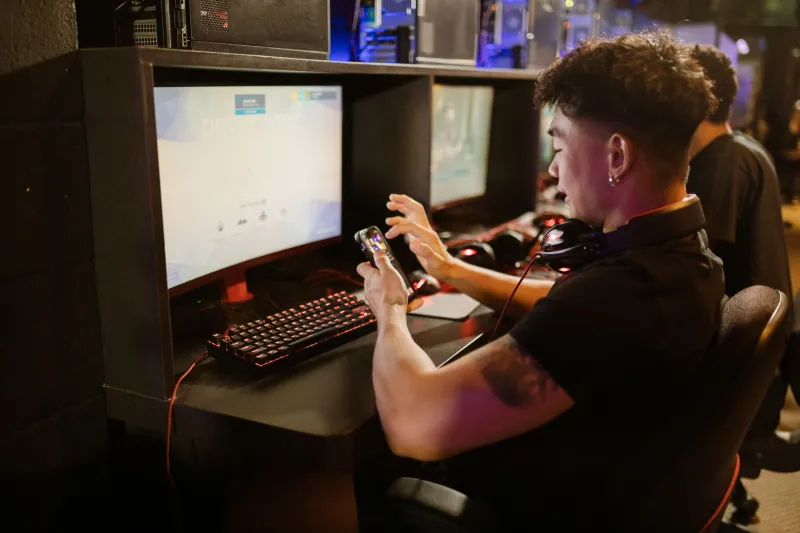
Live streaming platforms — Twitch in particular, with YouTube Gaming close behind — have become the most powerful discovery engines in casual gaming. Not because of algorithms alone, but because of something more human: shared experience. When a streamer plays a game, their audience isn't just watching — they're reacting, commenting, clipping moments, and making decisions in real time about whether they want to play it themselves.
For arcade-style games, this dynamic is almost perfectly engineered for virality. Short sessions. Immediate feedback. Clear win/lose states that make for satisfying content. A game that would take hours to appreciate in a traditional RPG context reveals its full personality in a five-minute stream segment. Viewers see the hook instantly.
"Arcade games are basically built for Twitch," said one indie developer who released a minimalist reflex game that exploded after being picked up by a mid-tier variety streamer. "There's no setup. You start playing, something funny or crazy happens immediately, and the audience is already invested. It's the perfect format."
The Numbers Behind the Noise
The economics of this pipeline are worth breaking down, because they're genuinely strange. A streamer doesn't need to be a mega-influencer to move the needle for a small indie arcade game. In fact, mid-tier creators — those with anywhere from 20,000 to 500,000 followers — often generate more conversion per viewer than massive channels, because their audiences are tightly engaged and highly trusting of their recommendations.
For a game priced at $3 to $5 on mobile or PC, a single well-received stream can generate thousands of purchases within 24 hours. For free-to-play titles with ad revenue or cosmetic monetization, a viral stream can translate into a player base that sustains the game for months. Developers who have experienced this describe it as winning a lottery they didn't know they'd entered.
But here's the catch: you can't manufacture it. Developers who try to force virality by paying for promotional streams often find the results flat — audiences can sense when enthusiasm is performed. The breakout moments that genuinely move games tend to be organic, chaotic, and impossible to predict. A streamer picks your game because they're bored at 2 a.m. and it's sitting in their library. Their audience goes nuts. The clip gets reposted. The cycle begins.
Designing for the Camera Without Selling Out
The smartest indie developers have started thinking about streamability as a design consideration — not in a cynical way, but as a genuine craft question. What moments in a game create natural commentary? Where does something surprising happen that a viewer would want to see again? How quickly does a new player understand what makes the game interesting?
Arcade games have a natural advantage here. The best ones are built around a core loop that's instantly legible — you understand the rules within seconds. But the great ones layer in enough unpredictability that even experienced players get caught off guard. That gap between mastery and chaos is where stream moments are born.
Games that have blown up through streaming in recent years share a handful of traits: they're visually distinctive enough to stand out on a thumbnail, they have a learning curve that produces funny failure states, and they reward skilled play in ways that are visually obvious to a non-playing audience. The skill expression has to be watchable, not just felt.
What Happens After the Wave
For developers who catch a viral moment, the aftermath is its own challenge. Servers crash. Review queues explode. Bug reports pour in from players using devices and configurations the solo dev never anticipated. One developer described the 72 hours after their game went viral as "the best worst week of my life."
But the longer-term picture is often genuinely positive. Players who discover a game through a stream tend to be more engaged than those who find it through traditional advertising — they came in with context, with enthusiasm borrowed from a creator they trust. Retention numbers for stream-discovered players tend to run higher than platform averages.
For casual gaming platforms like 1112 Game, where arcade titles live or die on repeat play, that kind of engaged player base is the whole ballgame. The streaming economy isn't replacing traditional game discovery — it's creating a second, faster lane right alongside it.
And for the developer alone in their apartment on a Tuesday? It only takes one stream. That's both the terror and the beauty of it.