The Finish Line Is the Feature: Why Endless Arcade Games Are Cheating You Out of a Real Win

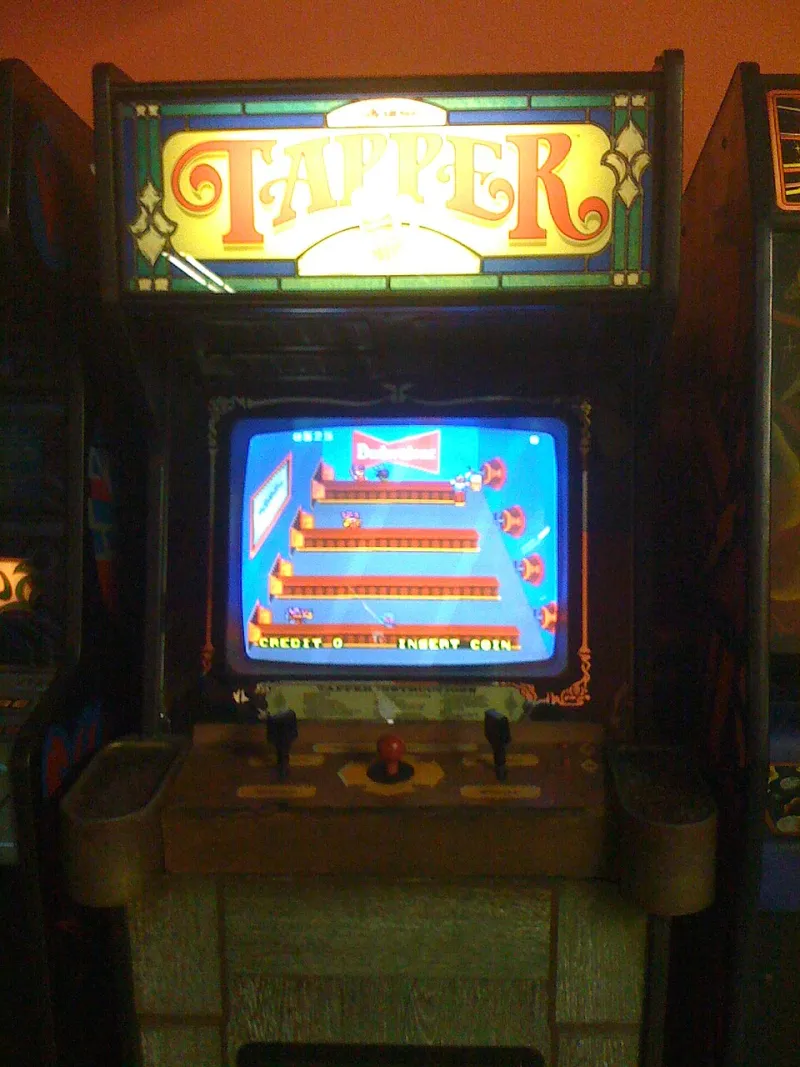
Photo: PattayaPatrol, CC BY-SA 4.0, via Wikimedia Commons
Endless mode feels generous. The game says: keep going, there is no ceiling, your run can last forever. It is a nice promise. It is also a trap. The best arcade games know when to end, and the ones that refuse to end are often asking you to mistake motion for progress.
Game Over Was a Design Choice
Walk into a classic arcade and the machine wants your quarter. That means the session has to end. Three lives, a timer, a difficulty curve that eventually outruns you. 'Game Over' is not a failure of imagination. It is the whole point. The run ends, the score goes on the board, and you get a clean chance to do better. The high score means something because the game had the guts to stop you.
That design DNA carried into early home consoles, even when saves and continues made longer games possible. Arcade-style games kept the short session because it worked. You could learn a pattern, lose to it, and come back. Mastery was the reward. The finish line was the feature.
The Treadmill Wears a Party Hat
Modern endless games strip out that finish line and replace it with a treadmill. Endless runners, idle loops, infinite progression trees, daily login streaks. The game never says 'you are done.' It says 'you are not done yet.' There is always another upgrade, another season, another number to feed. That can be fun for a while, but it changes the emotional math. You are no longer trying to solve a problem. You are trying to keep a meter from resetting.
Idle games are the purest version. You wait, you collect, you wait again. The game plays itself while you are away. That is not inherently evil, but it is not the same pleasure as landing a perfect jump or reading a boss pattern. It is the pleasure of maintenance. Endless runners have the same issue in a faster package. The scenery changes, but the question never does: how long can you keep the treadmill moving?
What Finite Games Get Right
Finite arcade games respect your time because they have a shape. Super Hexagon gives you six levels, each about a minute long. You can finish it. You can also spend months trying to finish it cleanly. Downwell has a bottom, a final boss, and an ending. Tetris Effect has a Journey mode with a credits screen. Pac-Man Championship Edition uses time limits to create pressure and closure. These games are not shorter because they are small. They are shorter because the designers know that a run needs a beginning, a middle, and an end.
A finish line creates stakes. If you know the run can end, every choice matters more. Do you risk the shortcut? Do you spend the last resource? Do you push for one more level? Endless games dilute that tension because the only real failure state is boredom. You can always keep going, so nothing you do feels final.
The Mastery Test
There is a difference between a game that is hard to finish and a game that is impossible to finish. The first respects you. The second just keeps you busy. A good arcade game should be able to answer a simple question: what does it look like to win? Not 'what does it look like to play forever?' Not 'what does it look like to buy the next upgrade?' Win. A clear state, a screen, a moment where you can put the controller down and say: I did that.
That does not mean every game needs a story campaign. A score attack can have a finish line. A puzzle game can have a final level. A rhythm game can have a last song. The finish line can be small. It just has to exist.
A Better Question Than 'How Long Is It?'
In 2026, we have been trained to ask how long a game is. Endless games answer that question by refusing to answer it. They offer infinite content, which often means infinite busywork. A better question is: what will I have learned when I stop? If the answer is 'a new number' and nothing else, the game may be holding you in place rather than moving you forward.
Endless mode is not automatically bad. Some people love the meditation of a long run. But the best arcade games know that a real ending is not a limitation. It is a gift. It says: here is the challenge. Here is the finish line. Now go earn it.