Quarters and Cocktails: Inside the Arcade Bar Craze That's Taken Over America's Nightlife
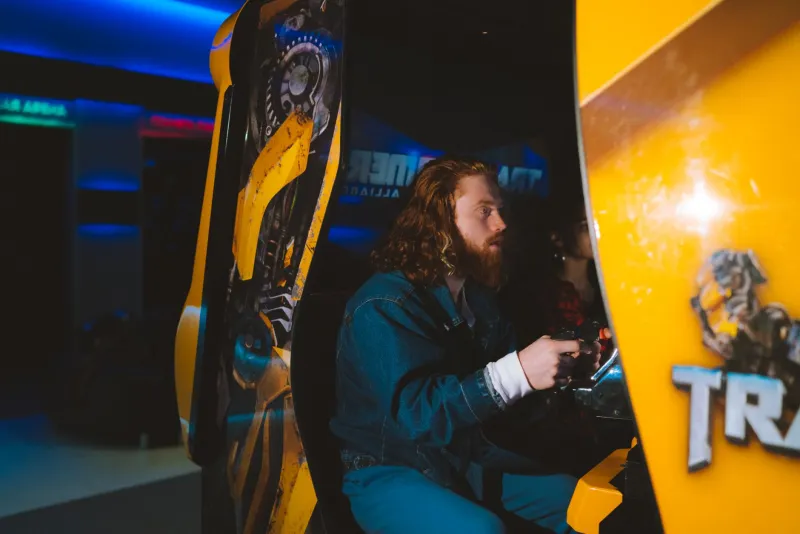
Somewhere between the third round of drinks and the fourth attempt to beat your friend's Ms. Pac-Man score, something interesting happens at an arcade bar. The noise level rises. Strangers start trash-talking each other over a cabinet. Someone who claimed they "don't really play games" is suddenly refusing to give up the joystick. The vibe in the room shifts into something that regular bars — with their passive music and static seating — almost never manage to generate.
That energy is exactly why the arcade bar concept has exploded across the United States over the last decade, and why it shows absolutely no signs of slowing down.
From Niche Experiment to National Trend
The first wave of dedicated arcade bars showed up in the early 2010s, mostly in larger cities with dense young professional populations. Barcade in Brooklyn — widely credited as one of the format's pioneers — opened in 2004, but the real proliferation came years later as the model proved sustainable and copycat concepts multiplied. By the early 2020s, you could find arcade bars in cities as varied as Nashville, Denver, Phoenix, and Raleigh.
The numbers are striking. Industry estimates suggest there are now well over 400 dedicated arcade bar and gaming lounge concepts operating across the US, with new openings continuing at a pace that has surprised even enthusiastic observers. These aren't all small operations, either. Some have become anchor tenants in entertainment districts, pulling foot traffic that benefits surrounding businesses.
What's driving all of this? The honest answer is that several trends collided at exactly the right moment.
The Nostalgia Economy Is Very Real
Millennials — the demographic that grew up with arcade culture in its original form, haunting mall arcades and pizza places throughout the '80s and '90s — are now in their 30s and 40s with disposable income and a very specific relationship to those memories. The cabinet games of their childhood aren't just entertainment; they're emotional artifacts. Playing Street Fighter II or Tron at a bar isn't just a game — it's a time machine with a two-drink minimum.
But the nostalgia angle only explains part of the audience. Gen Z players, who grew up entirely in the digital era and likely never dropped a quarter into an actual arcade machine, are showing up in massive numbers too. For them, the appeal is different — it's the tactile novelty of physical controls, the social visibility of a shared screen, and the Instagram-ready aesthetic of neon-lit cabinet rows. They're not chasing a memory. They're having a genuinely new experience that happens to be built from old parts.
That dual-generation appeal is part of why arcade bars have proven more durable than some industry observers expected. You're not marketing to a single cohort that will age out of the concept. You're hitting multiple audiences with different motivations and getting them into the same room.
The Experience Economy Angle
There's a broader cultural context here that goes beyond gaming specifically. American consumers — particularly younger ones — have been shifting their spending from stuff to experiences for years. The data on this is consistent and well-documented. People are paying premium prices for axe throwing, escape rooms, golf simulators, and pottery classes because the experience itself is the product.
Arcade bars fit perfectly into this framework. You're not just buying drinks; you're buying two hours of active entertainment in a social setting with a built-in competitive element. The per-hour value proposition is genuinely strong compared to a regular bar where you're essentially paying to stand in a room.
And the prices reflect that. Drinks at arcade bars often run $2-4 higher than comparable venues without the gaming component. Token or credit packages for game play add another revenue stream. Yet customers keep coming, and return visit rates at successful locations are consistently high. People aren't just tolerating the premium — they're deciding it's worth it.
What's Actually Happening Inside These Venues
Spend a Friday night at a busy arcade bar and you'll notice a few things that distinguish it from both regular bars and gaming-only spaces.
First, the competitive energy is real but low-stakes. Nobody came here to win a championship. But the leaderboard on a classic cabinet creates a naturally occurring rivalry between strangers that breaks the ice faster than almost any other social mechanism. A two-player head-to-head game is a social contract — you're suddenly invested in this person you met four minutes ago.
Several arcade bars have leaned into this deliberately. Weekly high-score competitions with posted results. Themed nights built around specific game genres — fighting game Fridays, shoot-em-up Saturdays. Some venues have built regular communities of players who show up specifically for the competitive programming, functioning more like a sports bar crowd than a casual nightlife crowd.
"We have people who come in every single Tuesday for our fighting game night," says the manager of a popular arcade bar in Nashville. "They're not just customers — they're a community. They know each other. They have feuds. They celebrate when someone gets a new personal best. That loyalty is something you can't manufacture. It just happens when you give people a real reason to compete."
This community-building function is arguably what separates the most successful arcade bars from the ones that don't make it. A space full of cabinets is a novelty that wears off. A space with an active competitive community is a destination.
The Trivia Night Killer
For years, trivia nights were the gold standard of bar-driven community programming. They drove midweek traffic, created regulars, and gave customers a reason to come back on a specific schedule. Arcade bars are increasingly eating into that territory, offering something trivia can't: the ability to compete individually or in small groups without needing a team, and a competitive format that rewards skill development over time.
You can get better at Galaga. You can practice. You can come back next week and beat your old score. Trivia doesn't offer that progression arc — you either know the answer or you don't. The arcade format creates a reason to return that's tied to personal improvement, and that's a powerful hook.
Where This Goes From Here
The arcade bar concept is still evolving. Newer venues are incorporating modern gaming alongside classic cabinets — VR stations, rhythm games, mobile-integrated leaderboards that let players compare scores with people at other locations. Some are experimenting with private event bookings, positioning themselves as alternatives to traditional party venues for birthday parties, corporate events, and date nights.
The digital and physical are converging here in interesting ways. Platforms like 1112 Game exist in the same cultural space as these venues — both are about the joy of accessible, competitive gaming in a social context. The arcade bar gives that experience a physical address. The online platform makes it available anywhere, anytime.
What they share is the core insight that got the whole thing started: games are more fun when other people can see your score. That's not a new idea. It's just one that American nightlife is finally building a proper home for.