Home Court Advantage: Why Millennials Are Dropping Serious Cash to Build Personal Arcades
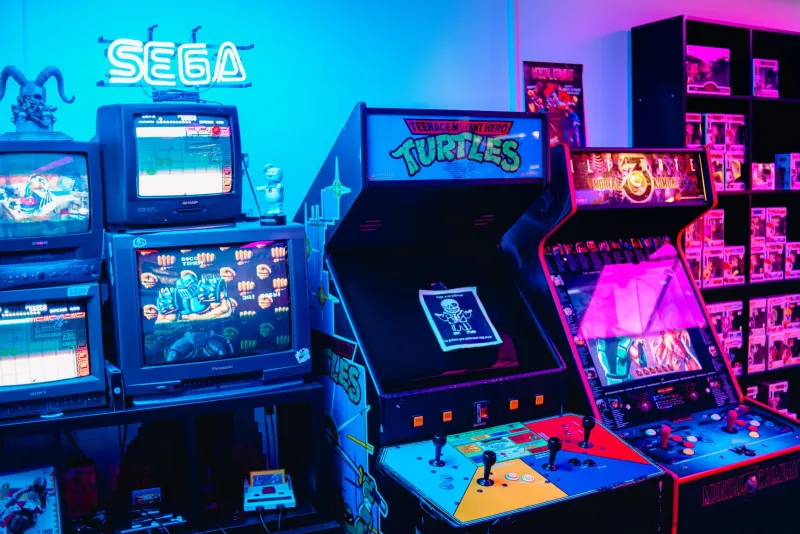
Somewhere in a suburb outside Columbus, Ohio, Marcus Webb has a problem most people would envy. His two-car garage no longer fits cars. Instead, it houses a fully restored Galaga cabinet, a cocktail-style Centipede table, a custom-built multicade running 500+ ROMs, and a neon beer sign that reads "Insert Coin." His wife calls it the Man Cave. His kids call it the best room in the house. His accountant calls it a lifestyle choice.
Marcus is 34, works in IT, and has spent somewhere north of $11,000 building what he describes as "the arcade I always wanted as a kid but could never have." He's not alone — not even close.
Across the US, millennials are quietly turning their homes into personal arcades at a rate that's catching the attention of collectors, manufacturers, and even a few psychologists. It's one of the more unexpected consumer trends to emerge from the last several years, and it says a lot about who we are, what we want, and why a chunky wooden cabinet with a CRT screen can feel like the most satisfying purchase a grown adult makes.
The Numbers Behind the Nostalgia
The vintage arcade cabinet market has been heating up steadily since around 2018, but the pandemic threw gasoline on it. With bars closed, arcades shuttered, and social life essentially paused, people started reimagining their homes as entertainment destinations. Sales of both restored original cabinets and modern reproduction units spiked dramatically through 2020 and 2021 — and the demand never fully retreated.
AtGames, one of the largest manufacturers of home arcade products, reported that their Legends Arcade Family line saw record interest during that period. Companies producing reproduction cabinets — licensed or otherwise — have expanded their catalogs significantly to meet demand from buyers who want the aesthetic of a classic machine without the maintenance headache of a 40-year-old PCB board.
Restored originals, meanwhile, can run anywhere from $800 for a beater Street Fighter II cabinet that needs work, to $4,000 or more for a pristine Donkey Kong or Ms. Pac-Man unit. Rare machines or particularly well-preserved examples fetch even more at auction. Yet buyers keep showing up.
It's Not Just Nostalgia — It's Status
Ask anyone deep in the home arcade hobby and they'll tell you the nostalgia angle is real but incomplete. Yes, there's something deeply satisfying about playing the exact machine you pumped quarters into at a pizza parlor when you were nine. But there's also something else happening.
"The home arcade has become a flex," says Dr. Priya Anand, a consumer psychologist based in Chicago who studies discretionary spending in millennial households. "It's experiential ownership. You're not just buying a thing — you're buying an environment, a story, an identity. And in the age of Instagram and TikTok, that environment is very shareable."
She has a point. Search #homearcade or #arcaderoom on any major social platform and you'll find thousands of beautifully lit setups, each one clearly curated for the camera. The neon glow of a marquee. The satisfying click of an original joystick. A cold beer resting on a cocktail cabinet while someone's kid attempts to beat Dad's high score. These images perform exceptionally well online, and that visibility creates a feedback loop — more people see it, more people want it.
For a generation that came of age in arcades but built their adult lives in an era of digital-everything, owning a physical cabinet is a way of reclaiming something tangible. It's the opposite of a streaming subscription. You can touch it. You can smell the old plastic. You can pass it down.
The Social Shift Nobody Talks About Enough
Marcus will tell you that his garage arcade has become the most social space in his life. His neighbors come over on Friday nights. His college friends make pilgrimages when they're in town. His kids' birthday parties have a built-in activity that no Chuck E. Cheese can replicate because it's his.
"We used to go out to do this stuff," he says. "Now people come to us. I don't have to find a parking spot or pay $15 for a cocktail. I can pause the game if someone needs a bathroom break. It's just better."
This sentiment echoes across the home arcade community. The pandemic didn't just force people indoors — it revealed that, for many, indoors was actually preferable. The commute to fun is now zero. The line for a machine is nonexistent. The environment is exactly how you like it.
Bar arcades and barcades remain popular (and we've covered that scene plenty), but they serve a different social function now. They're for discovery, for dates, for introducing someone to the hobby. The home setup is where the real playing happens.
What You Actually Need to Get Started
If this whole thing sounds appealing but the $11,000 price tag does not, good news: you don't have to go full Marcus right out of the gate.
Entry points exist at every level. A basic bartop arcade unit — essentially a mini cabinet that sits on a table — can be had for $150 to $400 and typically runs hundreds of classic games. Companies like Arcade1Up have made reproduction full-size cabinets widely available at major retailers for $300 to $500, bringing the aesthetic to a much broader audience. These aren't collector pieces, but they're fun, they look great, and they get the concept across.
For the more serious player, sites like eBay, Craigslist, and dedicated forums like KLOV (Killer List of Videogames) are where the real hunting happens. Expect to spend time researching, inspecting, and potentially repairing whatever you bring home. That process, many collectors will tell you, is half the fun.
The Hobby That Keeps Giving
What makes the home arcade trend genuinely interesting — beyond the nostalgia economics and the social media angle — is that it's a hobby with compounding returns. The more you learn, the more you enjoy it. Fixing a monitor. Rebuilding a joystick. Tracking down an original control panel overlay. Each small victory deepens the investment, not just financially but emotionally.
And at the end of all that effort, you have something you can play with your kids, host your friends around, and feel genuinely proud of. In a world where most entertainment is ephemeral — a show you'll forget, a game you'll delete — a cabinet in your garage is permanent.
Insert coin. Play forever.