Fast Forward: How a New Generation Learned to Win Games in Under an Hour
There was a time when bragging rights in gaming meant logging 80-hour saves. You showed off your fully leveled character, your maxed-out inventory, your completion percentage hovering at 99.8%. That was the flex. That was the culture.
Not anymore.
Today, the most celebrated players in online communities aren't the ones who spent the most time — they're the ones who spent the least. Finishing a game in four minutes isn't a failure. It's a world record attempt.
Welcome to the speedrun era.
What Speedrunning Actually Is (And Why It Exploded)
For the uninitiated, speedrunning is exactly what it sounds like: completing a game as fast as humanly possible, often exploiting glitches, skips, and frame-perfect tricks to shave seconds off a clock. It's been around since the early internet days, but it went mainstream somewhere between the rise of Twitch and the annual Games Done Quick charity marathons, which now pull in millions of viewers and raise serious cash for charity.
But the culture has spread way beyond dedicated runners chasing world records. It's infected casual gaming DNA at every level.
Younger players — particularly those who grew up alongside TikTok, YouTube Shorts, and the 15-second content cycle — have internalized a fundamentally different relationship with time. They're not anti-gaming. They're anti-waste. If a game can be solved efficiently, why drag it out?
The TikTok Brain Is Real (And Game Designers Know It)
This isn't just pop psychology. Attention research consistently points to shortened engagement windows among users who consume high-volume, rapid-fire content daily. That doesn't mean Gen Z can't focus — it means they've recalibrated what deserves their focus.
A 40-hour RPG isn't inherently bad. But when you're 19 years old, juggling school, a part-time job, a social life, and approximately 47 open tabs, the math just doesn't work. The opportunity cost of a single-player epic is enormous. A tight, punchy 20-minute arcade session? That fits.
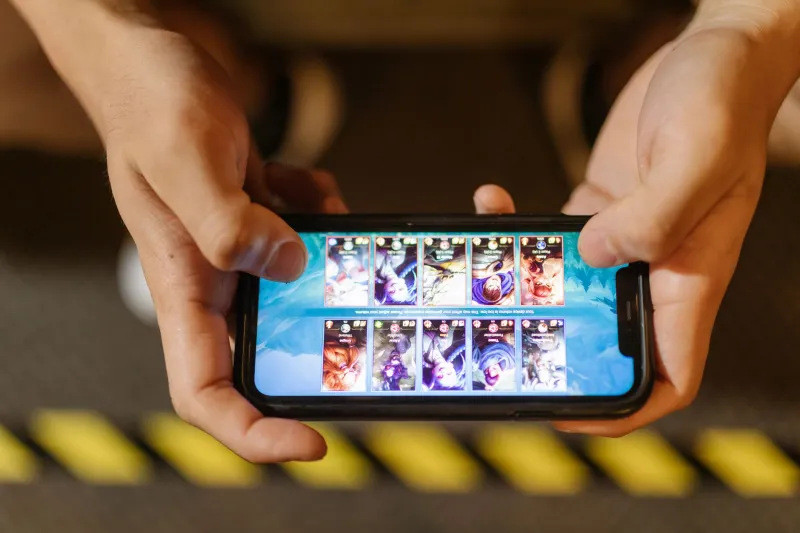
Mobile gaming has capitalized on this hard. The most downloaded casual games on the US App Store aren't sprawling adventures — they're loop-based, score-driven, and built to reward you in the first 60 seconds. Platforms like 1112 Game exist precisely because there's massive appetite for games you can actually finish in a lunch break, a commute, or a stolen moment between meetings.
The Completion Paradox
Here's where it gets interesting. Speedrunners, despite moving fast, are often the most deeply invested players in a given game's community. To run a game well, you have to understand it at a mechanical level most casual players never reach. You memorize level layouts. You study enemy AI patterns. You know the hitboxes better than the developers probably do.
So the argument that younger players are somehow less serious? It doesn't hold up.
What's shifted is the definition of mastery. Old-school mastery meant completing everything. New-school mastery means optimizing everything. Those are genuinely different skills, and the second one maps directly onto the kind of quick-reflex, pattern-recognition gameplay that arcade-style games have always rewarded.
That's not a regression. That's an evolution.
Streamers Changed the Rulebook
You can't talk about this shift without crediting streaming culture. When you watch a speedrunner on Twitch, you're watching someone perform competence at high speed. The entertainment isn't in watching them slowly explore a world — it's in watching them dismantle it systematically, methodically, and with style.
Streamer communities have essentially gamified the meta-game. It's not about what happens inside the game anymore; it's about how fast, how clean, and how entertaining the run looks from the outside. That performance layer adds a social dimension that 40-hour solo playthroughs simply can't compete with.
And when clips from those runs hit TikTok or Instagram Reels? They're already edited down to the best 30 seconds. The highlight reel is the game, for many viewers.
What This Means for Casual Gaming Going Forward
Game designers at every level are paying attention. Indie developers building mobile and browser games are increasingly designing with the speedrun mindset baked in — tight loops, clear objectives, and scoring systems that reward efficiency rather than just persistence.
Arcade-style games have always had this DNA. Think about classic high-score chasing: you weren't trying to 'complete' Pac-Man, you were trying to optimize your run through it. That philosophy never left. It just got a new audience.
The players who grew up watching 10-minute YouTube walkthroughs and 45-second TikTok tutorials aren't going to suddenly embrace 60-hour open worlds as their primary gaming diet. And that's fine. The casual gaming space — the quick-hit, score-based, jump-in-jump-out world that platforms like 1112 Game are built on — is exactly where their energy is landing.
Fast doesn't mean shallow. Sometimes it just means you've already figured out the most efficient route to having fun.
And honestly? That's a skill worth respecting.