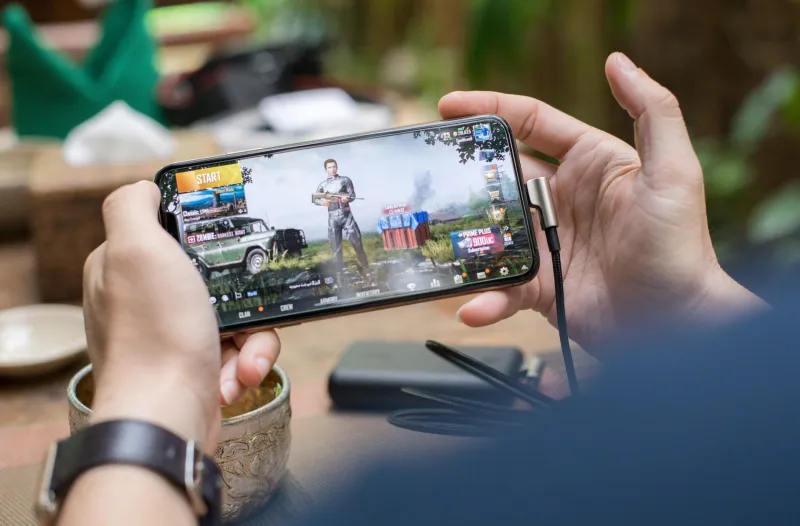
Quarters Won: How Arcade-Style Games Quietly Dethroned the Console Giants in 2024

There's a PlayStation 5 sitting in a living room somewhere in Ohio. It gets turned on maybe twice a week. Meanwhile, the person who owns it is spending forty-five minutes every morning on their phone, knocking out levels on a side-scrolling arcade runner before their commute even starts. That's not an anomaly. In 2024, that's the rule.
The data has been creeping up on the gaming industry for a couple of years now, but this year it finally became impossible to ignore. Arcade-style and casual games — the kind designed for quick sessions, immediate feedback, and zero learning curve — are now consistently outperforming major AAA console releases in one critical metric: daily active users. Not total revenue. Not Metacritic scores. The number of actual humans who open the game and play it every single day.
That's the number that matters. And right now, it belongs to the little guys.
The DAU Gap Nobody's Talking About
When a major console title drops, it dominates headlines for a week. Sales figures get thrown around. Streamers go wild. Then, about three weeks later, the daily player count starts its slow, predictable slide. That's just how those games are built — they're designed for immersion, for long campaigns, for weekends where you have six hours and nowhere to be.
Arcade games are built for Tuesday morning at 7:15 AM.
According to mobile analytics data tracked throughout 2024, the top-performing arcade and casual titles on both iOS and Android are sustaining daily active user counts that rival — and in several documented cases, exceed — the DAU numbers reported by some of the most hyped console releases of the year. The gap isn't enormous, but the trajectory is. Console DAUs fall off. Arcade DAUs hold steady, sometimes even climbing months after launch.
"We don't design for the weekend warrior," says Marcus Chen, an indie developer whose arcade platformer cracked the top 50 free games chart earlier this year. "We design for the person who has eleven minutes and wants to feel like they won something. That person exists every single day. That's your retention."
Why Accessibility Became the Most Powerful Feature in Gaming
For years, "accessible" was practically a pejorative in hardcore gaming circles. It meant easy. Dumbed down. Not for serious players. But the conversation shifted — fast — when the industry started looking at who was actually playing games in the US.
The average American gamer is 31 years old, according to the Entertainment Software Association's most recent data. They have a job. Probably a family. Maybe a commute. They don't have time to memorize a 47-button combo or sit through a 25-minute tutorial before anything fun happens. They want to press start and feel something immediately.
Arcade games figured this out in 1982. The rest of the industry is just now catching up.
"The barrier to entry on a lot of console games has gotten genuinely absurd," says Priya Nair, a UX designer who consults for mobile gaming studios. "You're asking someone to invest hours before they know if they even like the game. Arcade design flips that. You know if you like it in thirty seconds. That's not a bug — that's the whole feature."
The Console Industry's Response (And Why It's Complicated)
The big publishers aren't oblivious. You've seen the mobile spinoffs, the "lite" versions of major franchises, the push toward shorter narrative experiences. But there's a fundamental tension between the production models that built these companies and the design philosophy that makes arcade games work.
AAA games cost hundreds of millions of dollars to make. That investment demands a certain kind of game — long, feature-rich, visually spectacular. You can't greenlight a quarter-drop arcade title with a $200 million budget and expect the board to stay calm. The economics don't bend that way.
Meanwhile, a two-person indie studio in Austin or Chicago can ship a genuinely excellent arcade game for a fraction of that cost, price it free with optional cosmetics, and watch it quietly accumulate millions of daily players while the press is busy covering whatever cinematic open-world epic just dropped.
"We don't compete with the big studios," Marcus Chen says with a laugh. "We exist in completely different time slots. They own Saturday night. We own every other moment of the day."
What This Means for the Future of American Gaming
Here's the uncomfortable truth the console world is sitting with: the mainstream American gaming audience has already moved. Not away from consoles entirely — but away from the idea that the console experience is the default gaming experience.
For millions of players, the default is the phone. The default is five-minute sessions. The default is an arcade game that rewards them fast and lets them walk away clean.
That's not a crisis. It's an evolution. And if the numbers from 2024 are any indication, it's one that's picking up speed.
The quarter-drop machine never really died. It just learned to live in your pocket. And right now, it's winning.